Standing Forklift Safety Tips Every Operator Must Follow
Published February 11, 2026
Imagine navigating narrow warehouse aisles and quickly picking orders. The standing forklift is built for tight spaces and fast tasks. Its joystick controls and sideways stance are very different from traditional sit-down trucks. Without proper training, its agility can be dangerous. Operators need to be aware of their unique risks. These can lead to tip-overs, collisions, or injuries that disrupt operations.
In this article, we’ll cover how to operate a standing forklift safely. We’ll start with pre-operation checks and move to emergency response. We’ll show you how to use the controls properly. Plus, we’ll share tips to prevent common accidents. Whether you’re new or just need a refresher, this will serve as your guide to help you improve your skills and stay safe.
Why Standing Forklift Safety Matters For Operators And Employers
Safety is more than a regulatory requirement; it’s the cornerstone of an efficient warehouse. For operators, following forklift safety procedures reduces the risk of serious injuries. It helps them work confidently and return home safely. For employers, strong safety practices minimize downtime. They also prevent damage to stock and equipment. This promotes a culture of accountability.
Standing forklifts are often used in fast-paced, high-traffic environments. Here, even minor mistakes can lead to major consequences.
Common Causes Of Standing Forklift Accidents And Injuries
Most standing forklift incidents happen due to operator error. Many result from unfamiliarity with the machine’s compact design. Common causes include:
- Excessive speed and poor cornering
- Lack of awareness when reversing
- Incorrect use of the foot presence pedal
- Abrupt braking
- Failure to adapt to wet floors, congestion, or narrow aisles
Knowing these risk factors is crucial to preventing injuries.
General Standing Forklift Safety Tips And Safe Operating Practices
Maintain Correct Posture And Positioning
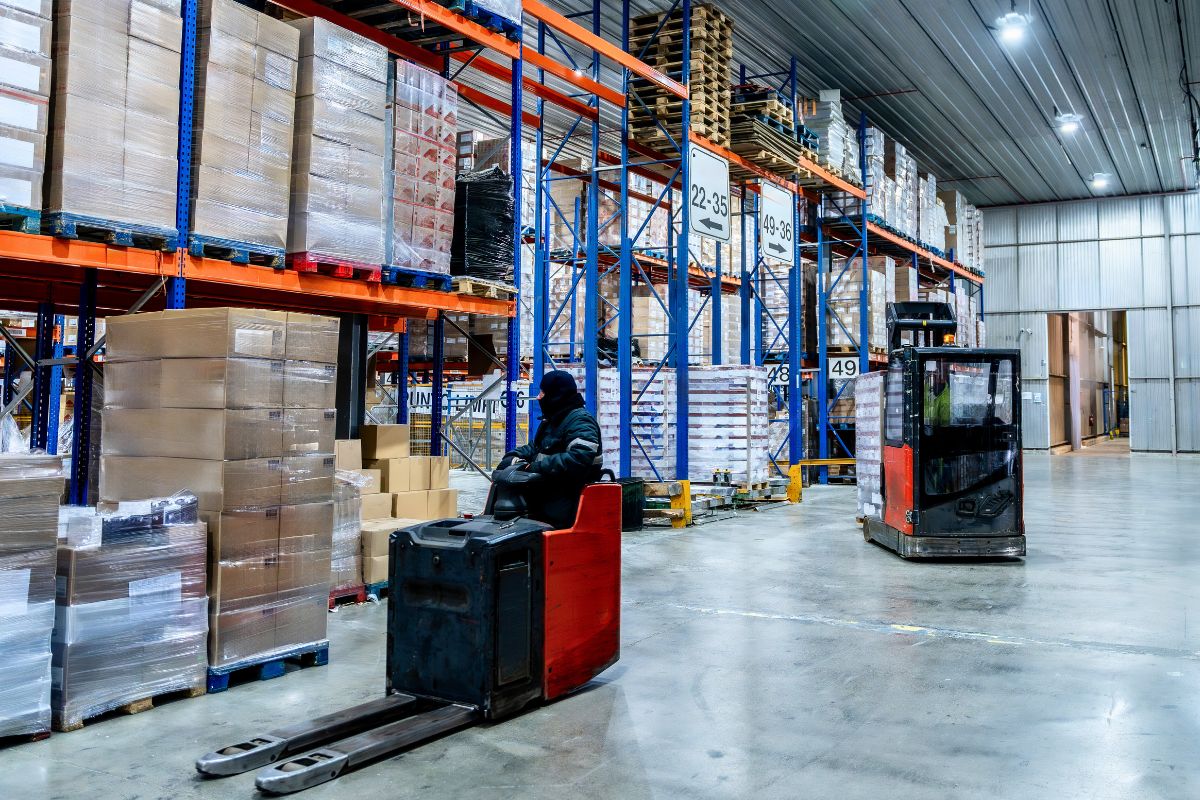
Operators should remain entirely within the operator compartment while the forklift is in use. To maintain a safe, balanced stance, plant your feet on the floor, keep your knees slightly bent, and position your body sideways. Leaning outside the forklift’s running lines increases the risk of severe crush injuries. This is especially dangerous near racking.
Operate At Safe Speeds And Control Turns
Standing forklifts accelerate quickly and steer from the rear, making speed management crucial. Always adjust your speed to suit the environment, load, and pedestrian traffic. Turning too quickly can cause the rear of the forklift to swing outward and shift its center of gravity, increasing the risk of a tip-over. Slow, controlled turns are essential for safe operation.
Keep Your Hands And Feet On The Controls
Your hands should stay on the joystick and steering controls while driving or handling loads. Avoid operating with wet or greasy hands, as this can reduce your control. Use smooth, gradual movements to prevent sudden shifts that could destabilize the forklift.
Face The Direction Of Travel And Stay Aware Of Hazards
Standing sideways allows operators to face the direction of movement directly. Always watch where the truck is going and stay alert to pedestrians, vehicles, floor hazards, and changes in lighting. While mirrors can improve visibility, they should never replace direct observation.
Smooth Starting, Traveling, And Stopping
Jerky movements can destabilize the load and increase the risk of losing control. Start gradually, allowing the forklift to accelerate smoothly. When stopping, decelerate steadily. Avoid sudden braking. Abrupt stops can shift the load and throw the operator off balance.
Reversing And Maneuvering In Tight Spaces
Reversing is often necessary when exiting racking or repositioning in aisles. Always sound the horn before reversing and ensure the path is clear. In tight spaces, move slowly and account for rear swing to avoid hitting racks, pallets, or pedestrians.
Safe Operation Of Controls
Hydraulic functions like lifting or tilting should only be used when the forklift is stopped or moving slowly into position. Steering, traveling, and lifting at high speeds can cause instability. This greatly increases the risk of collisions or tip-overs.
Never Carry Passengers Or Allow Unsafe Riding
Standing forklifts are designed for a single operator. Do not carry passengers. Don’t allow anyone to ride on the forks, platform, or battery cover. This can cause fatal injuries.
Park And Shut Down Safely
Park only in designated areas, keeping the forklift clear of traffic lanes. Lower the forks fully to the floor, turn off the power, remove the key, and engage the parking brake before leaving.
Pre-Operation Safety Checks For A Standing Forklift
Daily Visual And Functional Inspection
Before each shift, inspect the tires, forks, and mast for damage or unusual wear. Check for hydraulic fluid leaks and ensure all guards and safety features are secure and intact.
Testing Brakes, Steering, And Forklift Controls Before Use
After the visual inspection, step onto the platform. Make sure the presence pedal works correctly. Check that the steering is smooth. Test the forks by raising and lowering them. Confirm that all tilt and reach functions work properly. Finally, test the horn and warning devices to ensure they’re loud and functional.
Battery Condition And Charging Checks
Inspect the battery change indicator, check cables for damage, and ensure all connectors are secure. Only trained personnel should handle watering or maintenance. Do not operate the forklift if there are signs of overheating, smoke, or electrolyte leakage.
Emergency Situations And Incident Response
- Handling collisions and near-misses. Immediately stop the forklift, secure the area, and check for injuries. Report all incidents and near-misses to your supervisor to address hazards promptly.
- Tip-over response and safe operator positioning. In the event of a tip-over, operators should step away from the rear of the truck and move clear of its falling path. Always follow the equipment manufacturer’s specific guidelines.
- Reporting defects, incidents, and unsafe equipment. Immediately tag defective models as out of service and remove the key. Qualified personnel should perform repairs. Prompt reporting ensures unsafe equipment isn’t used by others.
Frequently Asked Questions
How does an electric standing forklift differ in safety from other forklifts?
They use responsive electronic controls and a presence-sensing pedal. They also use various braking techniques. These features need smooth and precise inputs from the operator.
Which standing forklift controls should operators focus on during training?
Mastering the joystick and coordinating its use with the presence pedal are the primary skills to learn.
Do standing forklift operators need separate certification from sit-down models?
Certification for sit-down forklifts doesn’t automatically qualify operators to operate stand-up models.
How often should a standing forklift be inspected for safety?
At least once a day or before each shift during continuous operations.
Safer Every Shift: Putting Standing Forklift Safety Into Daily Practice
A safety-first culture for standing forklift use starts with individual choices. Operators should respect the equipment’s limits. They must follow all operating procedures. Staying alert to changing conditions is also crucial. This ensures productivity never comes at the expense of safety. A successful shift is one where everyone finishes their work unharmed, ready to return the next day.
Looking to enhance your warehouse operations? Powered Pallet Trucks offer reliable equipment and material-handling solutions. We help you choose the right electric and industrial models for your needs.
Looking for reliable pallet trucks or forklifts?
Superlift offers top-quality materials handling equipment built to keep your operations moving. Explore our full range today and find the right solution for your business.

About The Author
Meet Rei Bayucca, a content specialist at Superlift, bringing clarity to complex topics in materials handling. From pallet trucks to forklifts, Rei’s insights help businesses move smarter.