Forklift Weight Guide: How Much Can Yours Really Lift?

Published December 18, 2025
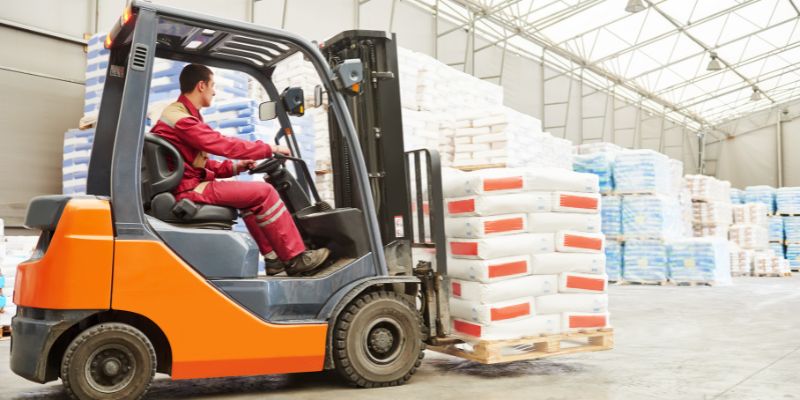
Have you ever looked at a forklift zipping around a warehouse and wondered, “How heavy is that thing, anyway?” It’s a common question, and the answer usually surprises people. These machines are deceptively heavy, often weighing two to three times more than the average passenger car.
Understanding forklift weight isn’t just about satisfying curiosity. It is critical for safety, transport logistics, and ensuring your warehouse floors don’t crack under the pressure. Whether you are a seasoned facility manager or a new operator, knowing the ins and outs of your equipment’s weight is essential.
In this guide, we will break down everything you need to know about forklift weights, lifting capacities, and why these numbers matter for your daily operations.
Average Weight of a Forklift
So, how much does a forklift actually weigh? There is no single answer because forklifts come in various shapes and sizes, from small pallet jacks to massive container handlers. However, we can look at the averages for the most common types found in warehouses.
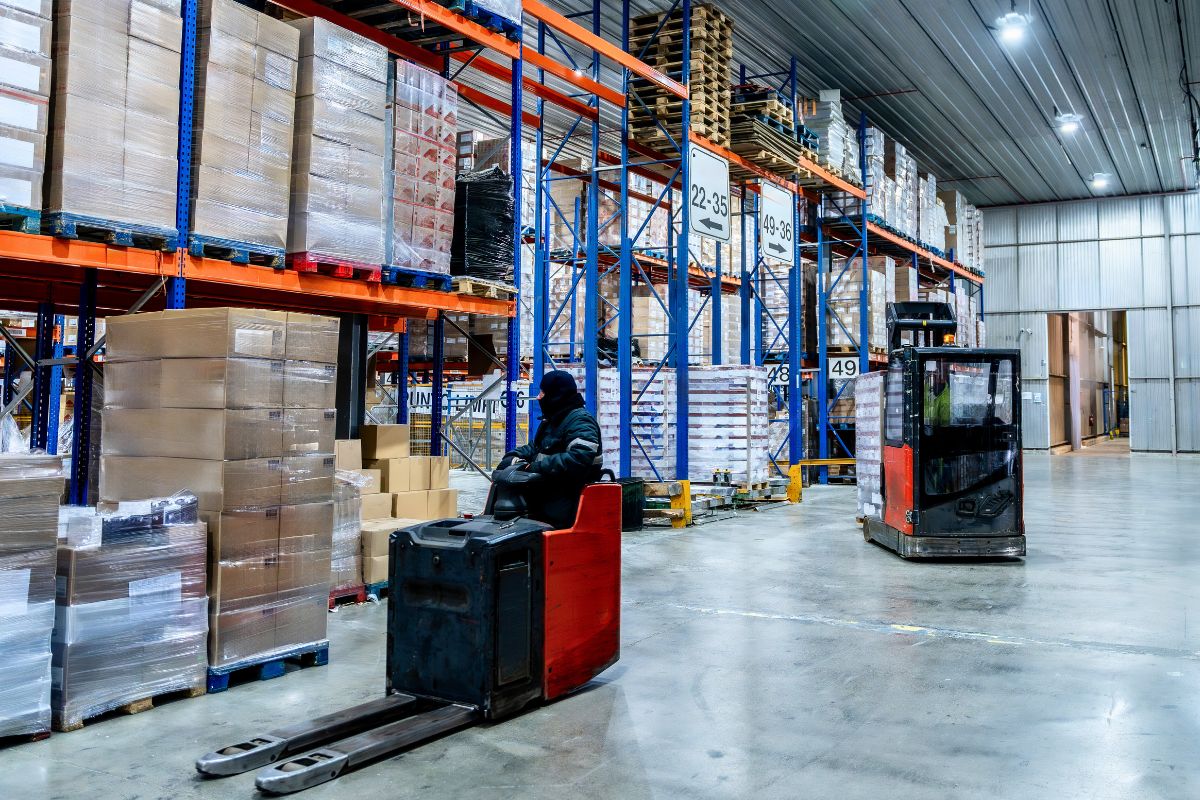
A standard warehouse forklift, the kind you likely see loading trucks at a docking bay, typically weighs between 8,000 and 9,000 pounds (roughly 3,600 to 4,100 kg).
To put that into perspective, a Ford F-150 pickup truck weighs somewhere between 4,000 and 5,000 pounds. That means a relatively compact forklift can weigh nearly double that of a full-size truck.
Here is a quick breakdown of weight ranges by type:
- Electric Indoor Forklifts: 3,000 – 8,000 lbs
- Standard Propane Forklifts: 8,000 – 10,000 lbs
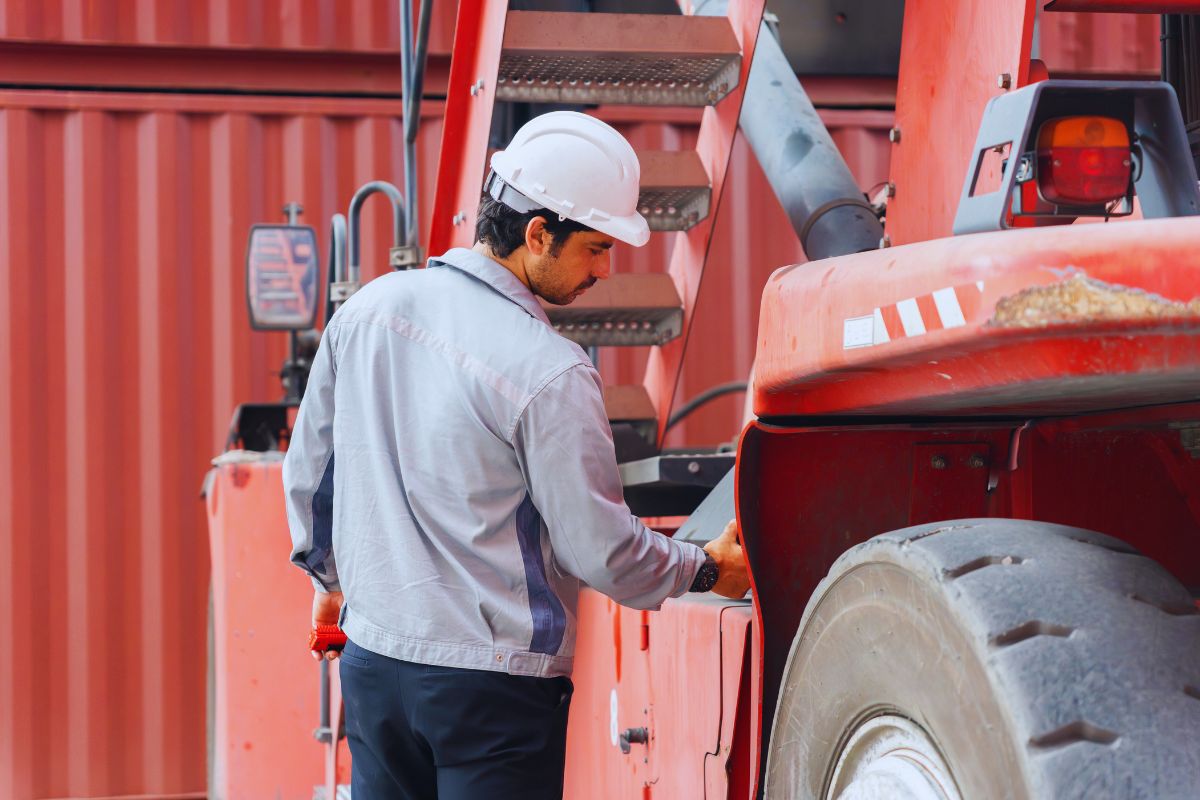
- Rough Terrain Forklifts: 12,000 – 30,000 lbs
- Heavy-Duty Diesel Forklifts: 15,000 – 100,000+ lbs
Why Are They So Heavy?
The reason for this immense weight is simple physics. Forklifts operate on a counterbalance system. To lift a heavy load on the front forks without tipping forward, there must be a significant amount of weight in the rear of the machine acting as an anchor. This is why the “service weight” (the weight of the forklift itself) is usually much higher than its lifting capacity.
Key Factors Affecting Forklift Weight
Not all forklifts are created equal. Several variables contribute to the final number on the scale. When you are calculating floor loads or transport requirements, you need to consider more than just the base model specs.
1. Power Source (Battery vs. Engine)
The engine type plays a huge role in forklift weight.
- Electric Forklifts: These don’t have heavy internal combustion engines or transmissions. Instead, their weight comes largely from the battery. A typical industrial lead-acid battery alone can weigh anywhere from 1,000 to 3,000 pounds or more. The battery acts as part of the counterweight.
- Internal Combustion (IC) Forklifts: These run on propane, diesel, or gasoline. While they don’t have massive batteries, they have heavy engines, transmissions, and cast-iron counterweights bolted to the rear to maintain stability.
2. Mast Height and Type
The mast is the vertical assembly that does the actual lifting. A standard 2-stage mast is heavy, but if you need to reach higher shelves, you might opt for a 3-stage or 4-stage mast. Each additional stage adds steel channels, hydraulic cylinders, and chains, significantly increasing the overall vehicle weight.
3. Attachments
Are you using standard forks, or do you have a paper roll clamp, a carton clamp, or a side shifter installed? Attachments are heavy metal tools. Not only do they add physical weight to the front of the forklift, but they also push the load center out further, which often reduces the amount of weight you can safely lift.
4. Tire Type
Solid pneumatic tires (common on outdoor forklifts) weigh more than cushion tires (common on indoor warehouse lifts). While tires might seem minor, on large industrial equipment, the difference adds up.
How Weight Impacts Lifting Capacity
There is a direct—and vital—relationship between how much a forklift weighs and how much it can lift. This is often referred to as the “capacity rating.”
A general rule of thumb in the industry is that a forklift’s service weight is roughly 1.5 to 2 times its lifting capacity. For example, a forklift rated to lift 5,000 pounds will likely weigh close to 9,000 pounds itself.
The Stability Triangle
Forklifts are designed around a center of gravity. When a forklift picks up a load, the center of gravity shifts forward. If the load is too heavy, the center of gravity moves outside the “stability triangle” formed by the front wheels and the rear axle pivot point. The result? The forklift tips over.
The manufacturer calculates the maximum safe lifting capacity based on the machine’s counterweight. If you try to lift 6,000 pounds on a forklift rated for 5,000 pounds, the rear counterweight won’t be heavy enough to keep the back wheels on the ground.
De-rating and Load Centers
It is crucial to read the data plate on your specific forklift. This plate tells you the capacity at a specific “load center” (usually 24 inches from the face of the forks).
If your load is oddly shaped, longer than 48 inches, or if you are lifting to extreme heights, your lifting capacity decreases. This is known as “de-rating.” Just because your forklift weighs 9,000 pounds doesn’t mean it can lift anything; it can only lift what its engineering allows based on stability physics.
Transporting Your Forklift
Knowing your specific forklift weight is perhaps most important when you need to move the machine to a different job site.
Because they are so dense, you cannot simply drive a forklift onto a standard utility trailer.
- Trailer Capacity: You need a heavy-duty trailer with a payload capacity that exceeds the forklift’s weight.
- Ramp Strength: The ramps must be rated to support the concentrated point load of the forklift’s tires.
- Floor Ratings: If you are delivering a forklift to a building with a basement or a mezzanine, you must verify that the floor PSI rating can handle the machine’s weight.
Always check the data plate for the “Service Weight” before loading a forklift for transport. Never guess. Guessing leads to damaged trailers and dangerous accidents.
Need Reliable Equipment? Trust the Experts
When it comes to material handling, having the right equipment is only half the battle. You also need the right knowledge to operate it safely and efficiently.
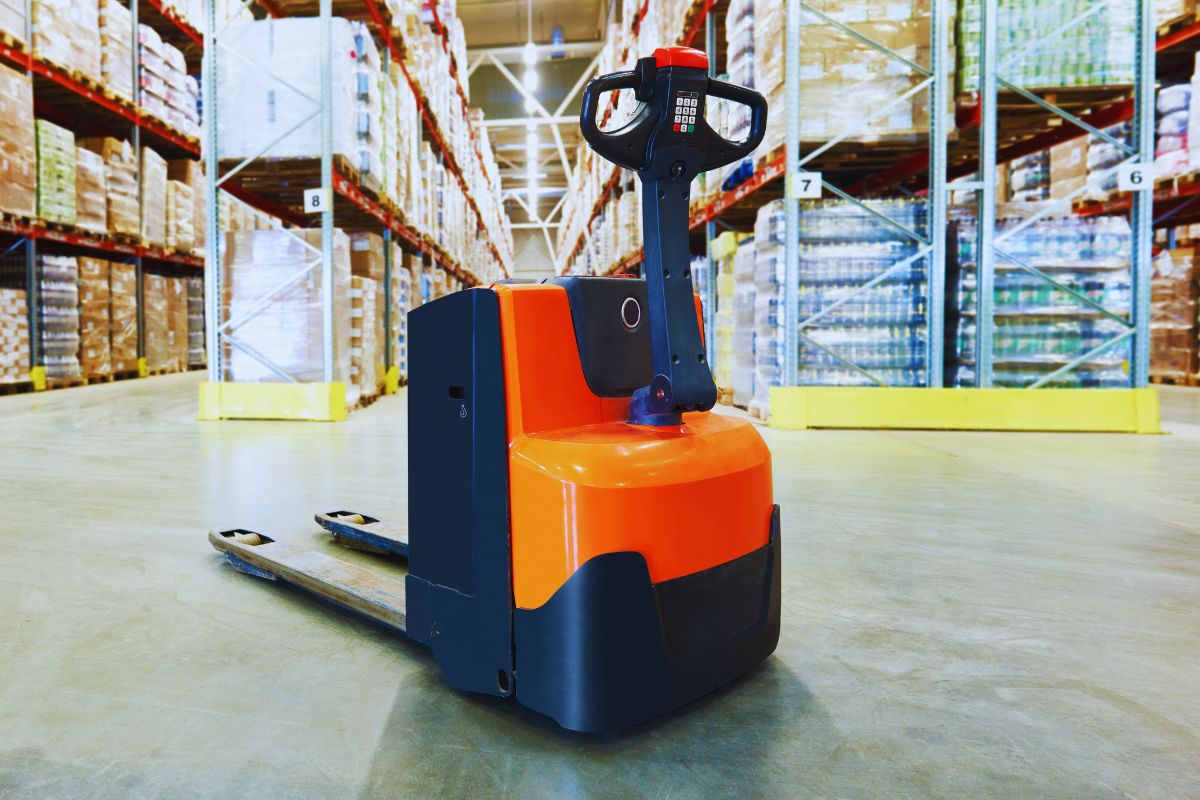
At PoweredPalletTrucks.com, we specialize in high-quality material handling solutions tailored to your specific needs. Whether you are looking for agile electric pallet trucks for tight warehouse aisles or robust lifting equipment for heavier loads, our range is designed with performance and reliability in mind.
We don’t just sell equipment; we help you understand the specs, including weight and capacity, so you can make the best choice for your facility. Visit us today to upgrade your fleet with tools that work as hard as you do.
Summary
Forklift weight is a fundamental spec that impacts safety, performance, and facility maintenance.
- Average Weight: Expect a standard warehouse forklift to weigh around 9,000 lbs.
- The Ratio: The machine usually weighs roughly 2x its lifting capacity.
- Factors: Batteries, mast height, and attachments all add significant weight.
- Safety: Never exceed the rated capacity found on the data plate.
By respecting the weight of these powerful machines, you ensure a safer workplace and a more efficient operation. Before you lift that next pallet, take a second to check your data plate, you might be surprised by just how much power you are controlling.
Looking for reliable pallet trucks or forklifts?
Superlift offers top-quality materials handling equipment built to keep your operations moving. Explore our full range today and find the right solution for your business.

About The Author
Meet Rei Bayucca, a content specialist at Superlift, bringing clarity to complex topics in materials handling. From pallet trucks to forklifts, Rei’s insights help businesses move smarter.