The Ultimate Guide to Choosing the Best Pallet Stacker
Published February 20, 2026
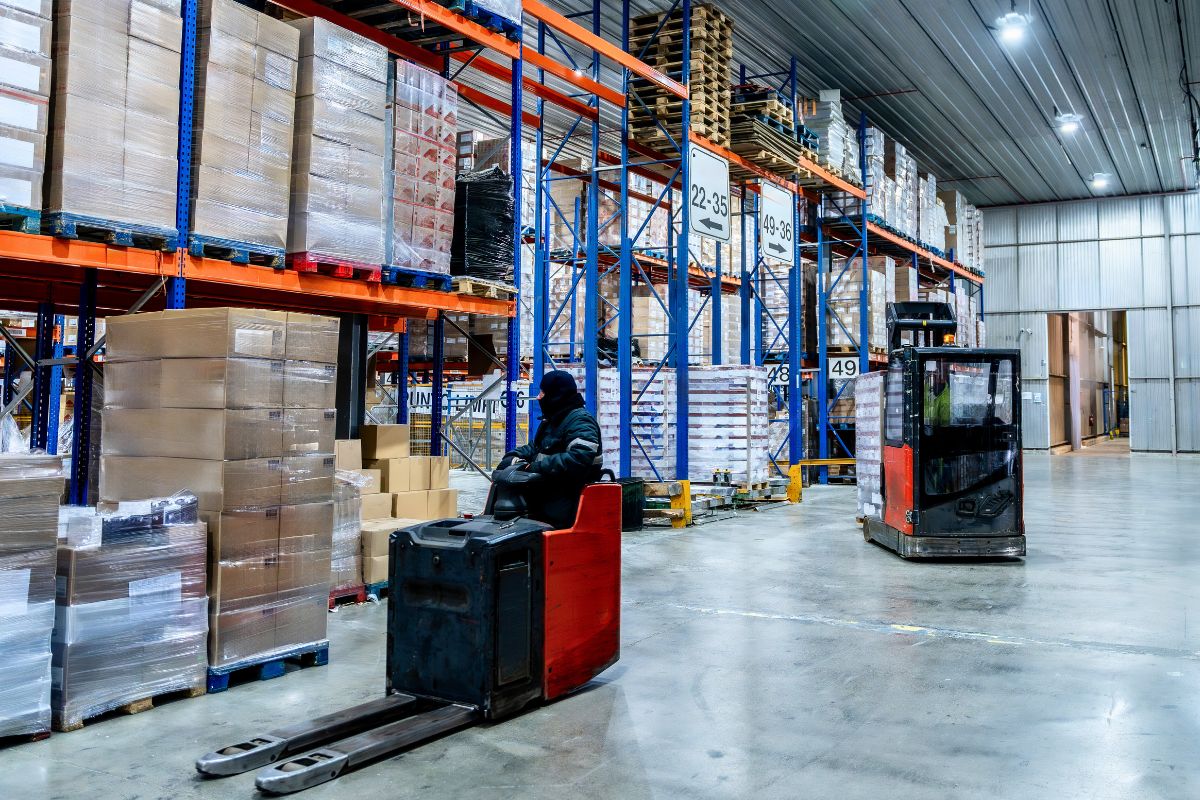
Walking into a warehouse without the right equipment is like trying to build a house without a hammer. You might get some things done, but it’s going to be slow, painful, and potentially dangerous. If your daily operations involve moving heavy loads and stacking them high, you don’t just need a manual pallet jack; you need a pallet stacker.
But here is where it gets tricky. Do you need a manual one? A fully electric ride-on? What about straddle legs versus counterbalanced designs?
Choosing the wrong equipment can be a costly mistake. It can lead to bottlenecks in your workflow or, worse, safety hazards for your team. This guide cuts through the technical jargon to help you understand exactly what you need. We’ll cover the different types of stackers, the critical factors you must consider before buying, and why this piece of equipment is the secret weapon for efficient warehouses.
What is a Pallet Stacker and Why Do You Need One?
Think of a pallet stacker as the perfect middle ground between a simple pallet truck and a full-sized forklift.
A standard pallet truck (or pump truck) is great for moving loads horizontally across the floor. But once you need to lift that load, say, to place it on a rack, a shelf, or into a delivery truck, a standard truck won’t cut it. That is where the stacker comes in. It has a mast that allows it to lift pallets to various heights, often up to 5 meters or more.
They are generally smaller and more maneuverable than forklifts, making them ideal for:
- Small to medium-sized warehouses with narrow aisles.
- Retail backrooms are where space is tight.
- Production lines where goods need to be lifted to working height.
- Loading and unloading delivery vehicles without a loading dock.
The Different Types of Pallet Stackers
Not all stackers are created equal. The market is filled with various configurations designed for specific tasks. Let’s break down the main categories so you can spot the difference.
1. Manual Pallet Stackers
These are the entry-level options. They require physical effort to push the unit and usually a hand or foot pump to lift the forks (hydraulic lift).
- Best for: Very low-volume operations where you only lift a pallet occasionally.
- Pros: Cheapest upfront cost, very little maintenance.
- Cons: Physically demanding for operators; slow lifting speeds.
2. Semi-Electric Stackers
These hybrids offer a powered lift mechanism but still require manual effort to move the unit across the floor.
- Best for: Warehouses where lifting happens frequently, but travel distances are short.
- Pros: Reduces the strain of lifting; faster than manual options.
- Cons: Pushing a loaded stacker manually can still be tiring over long distances.
3. Fully Electric Pallet Stackers
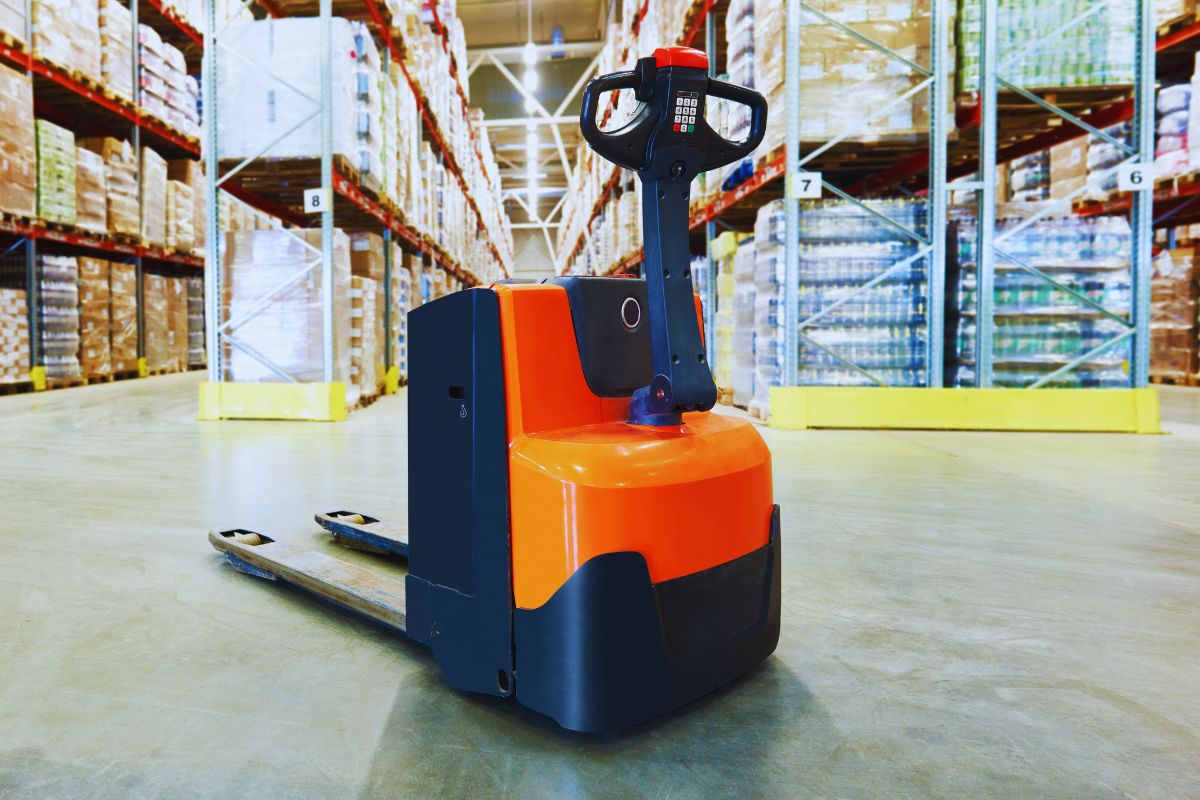
These are the workhorses of modern logistics. Both the lifting and the driving are powered by electric motors (usually lithium-ion or lead-acid batteries).
- Best for: Medium to high-volume operations, longer travel distances, and frequent stacking.
- Pros: Zero physical strain for the operator; high efficiency; safety features like automatic braking.
- Cons: Higher initial investment than manual versions.
4. Straddle Stackers
This is a specific design where the “legs” of the stacker are wider than the forks, allowing them to “straddle” the pallet.
- Best for: Handling “closed” bottom pallets (like many American or UK standard pallets) where bottom boards would otherwise block the forks.
- Pros: Very stable; versatile for different pallet types.
5. Counterbalanced Stackers
Unlike straddle stackers, these don’t have support legs extending forward. Instead, they have a heavy weight in the back (like a forklift) to balance the load.
- Best for: Tight areas where straddle legs would get in the way; loading trucks where you need to drive right up to the edge.
- Pros: Can handle almost any pallet type; very versatile.
- Cons: Longer body length means they need a wider turning circle.
Critical Factors to Consider Before Buying
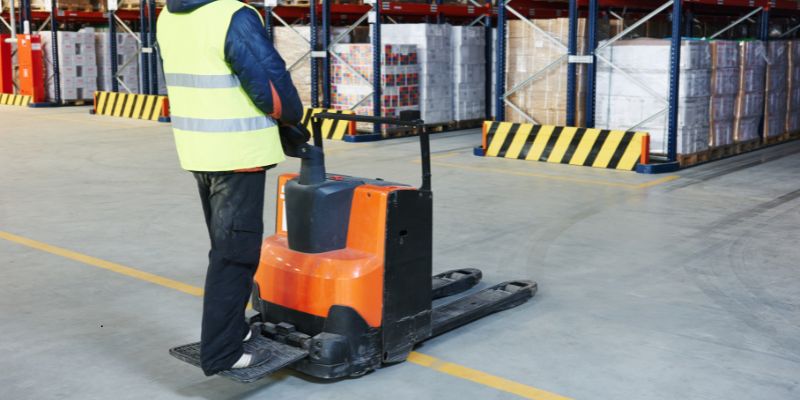
Before you click “buy” on the first pallet stacker you see, you need to audit your workspace. Here are the non-negotiables to check.
Load Capacity
This is safety rule number one. How heavy are your heaviest pallets? Most stackers range from 1,000kg to 2,000kg capacity.
- Expert Tip: Always buy a stacker with a capacity slightly higher than your maximum load. If your pallets are 1,000kg, aim for a 1,200kg unit to avoid straining the hydraulics.
Lift Height
Measure your highest racking beam. Your stacker needs to lift the pallet over that beam, not just to it.
- Check the Mast: Keep in mind that as the forks go up, the mast extends. Ensure your ceiling height (and any low-hanging lights or doorframes) can accommodate the stacker when fully extended.
Pallet Type (Open vs. Closed)
This is the most common mistake buyers make.
- Open Pallets (Euro Pallets): These have no bottom boards blocking the forks. Almost any stacker works here.
- Closed Pallets (CHEP/Blue Pallets): These have bottom boards. You cannot use a standard fork-over stacker for these because the forks will crush the bottom boards. You must use a straddle stacker or a counterbalanced stacker.
Battery Technology
If you go electric, look at the battery type.
- Lead-Acid: Cheaper but requires maintenance (watering) and long charging times.
- Lithium-Ion: More expensive upfront but maintenance-free, lighter, and allows for “opportunity charging” (plugging it in during a 15-minute break).
Why Investing in the Right Stacker Matters
We often see businesses trying to “make do” with a manual pump truck when they really need a stacker. Upgrading brings immediate ROI in three key areas:
- Efficiency: An electric stacker moves faster and lifts more quickly. What used to take two people ten minutes can be done by one person in two minutes.
- Safety: Musculoskeletal disorders are a leading cause of workplace absence. Removing the physical strain of pulling 1,000kg loads protects your workforce.
- Space Utilization: Stackers allow you to go vertical. Instead of storing everything on the floor, you can install racking and instantly double or triple your storage capacity without renting a bigger warehouse.
Trusted Expertise from Powered Pallet Trucks
At Powered Pallet Trucks, we don’t just sell equipment; we solve material handling headaches. We understand that every warehouse floor is different, and the “best” stacker is simply the one that fits your specific workflow.
We specialize in high-quality electric lifting equipment designed for durability and ease of use. Whether you need a compact pedestrian stacker for a tight stockroom or a heavy-duty ride-on model for a distribution center, our range is curated to meet rigorous industrial standards.
Our team focuses on transparency, helping you navigate the specs like lift height, residual capacity, and battery life so you walk away confident in your choice. When you partner with us, you’re getting equipment backed by deep industry knowledge and a commitment to keeping your supply chain moving.
Conclusion
Selecting the right pallet stacker isn’t just about buying a machine; it’s about optimizing your entire operation. By understanding the difference between manual and electric, checking your pallet types, and measuring your lift heights, you can make a choice that boosts productivity and keeps your team safe.
Don’t guess when it comes to heavy lifting. Assess your needs, consult the experts, and invest in quality equipment that will serve your business for years to come.
Disclaimer: Always ensure operators are properly trained and certified to use material handling equipment in accordance with local health and safety regulations.
Looking for reliable pallet trucks or forklifts?
Superlift offers top-quality materials handling equipment built to keep your operations moving. Explore our full range today and find the right solution for your business.

About The Author
Meet Rei Bayucca, a content specialist at Superlift, bringing clarity to complex topics in materials handling. From pallet trucks to forklifts, Rei’s insights help businesses move smarter.